

(Approx: 7min read)
If you picture modern motor navigation, you’ll probably imagine either a dashboard glowing with digital maps or a smartphone suction-cupped to the windscreen…
Yet, despite the near-universal presence of sat-navs and smartphone apps, an interesting statistic has emerged from an exclusive poll by Warrantywise: 16% of UK drivers still use physical maps as their primary navigation tool.
Yes – in a world of live traffic rerouting, lane-guidance arrows and crowdsourced hazard warnings, almost one in five of us still reach for a folded map of some kind when hitting the road, revealing something fascinating about how Brits drive, think, and trust their tech.
Here, we explore why maps endure, what this tells us about the way we travel, and some delightfully British quirks around navigation that refuse to budge.
Key facts at a glance:
- An exclusive Warrantywise poll has revealed as many as 16% of UK drivers still rely on physical maps to calculate their route when setting off on a car journey.
- The number is roughly similar to the number of people in the UK who do not use social media as of 2025 (~21%). [1]
- Trust issues with tech, the desire to be aware of the bigger geographical picture and the number of signal blackspots in more rural areas of the UK are thought to be contributing factors to the statistic. [2]
- There are many examples of situations in the UK where drivers have found themselves stranded due to the routes advised to them by modern sat nav software. [3]
- According to separate research, drivers in rural regions, drivers over 55 years old and classic car enthusiasts are more likely to favour physical maps for wayfinding over sat nav.
- Poll participants were not asked to specify whether they use the physical maps whilst driving, but according to the law, drivers must ensure they ‘are in proper control of their vehicle at all times’.
- The ‘shared experience’ of paper-based navigation is also thought to be a contributing factor to the statistic.
The digital majority… but not quite a monopoly – POLL DATA:
| TYPE OF NAVIGATION | PERCENTAGE SAID THEY USED (%) |
|---|---|
| Google/Apple maps | 54 |
| Car's internal sat-nav | 36 |
| Other smartphone software | 21 |
| Physical map | 16 |
| External sat-nav software | 15 |
| Other navigation tools | 1 |
| Never use any navigation tools | 6 |
The poll data shows a more predictable hierarchy towards the higher percentages:
The headline is clear: the smartphone app is the most used method for navigation in the UK.
With more than half of drivers relying primarily on Google or Apple Maps, and a further 21% using other apps like Waze, digital navigation has well and truly taken the lead.
The surprise stat here isn’t in the dominance of digital tools, it’s in the stubborn resilience of physical maps. To put 16% into perspective, it’s roughly the same proportion of UK adults who don’t use social media at all (~21%) [1]
This isn’t a niche. It’s a meaningful chunk of the population.
Why physical maps refuse to disappear:
Are Brits simply nostalgic for a simpler time, or is there more to it?
1. Trust issues with tech.
The UK has long shown a healthy scepticism toward digital navigation. According to Transport Focus, around a third of drivers say they “don’t fully trust” sat-nav directions, especially in rural or unfamiliar areas. [4]
And they don’t say this without reason – the UK is infamous for:
- Duplicate place names
- Narrow rural lanes that are technically ‘roads’ but extremely difficult to navigate
- Sudden height restrictions
- Surprise one-way systems
A physical map allows you to alter your route as necessary, and won’t reroute you into a difficult or even dangerous new direction.

2. The comfort of the bigger picture.
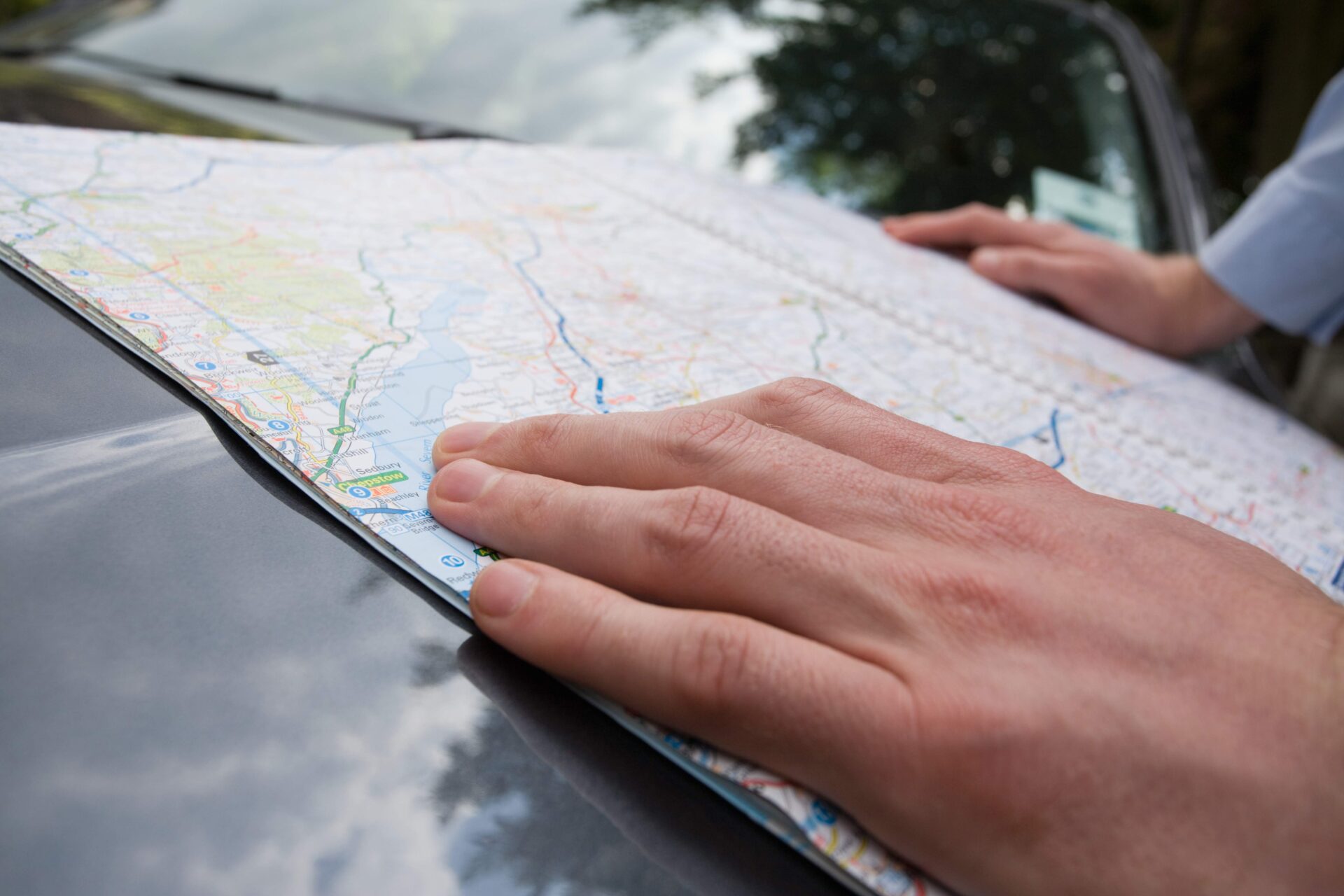
Physical maps do something digital navigation doesn’t proactively do: they show everything at once.
With a proper road atlas, you can:
- See the surrounding towns
- Spot alternative potential routes
- Understand the wider geography of the area
- Gauge distance intuitively
This, of course, is possible by simply zooming out on digital sat-navs… but for many drivers – especially those who learned to drive pre-smartphone – this more traditional view is clearly a better fit.

3. Reliability in remote areas of Britain.
The UK is small relative to other nations, yet surprisingly full of signal black spots. Swansea Valley, parts of Cumbria, chunks of rural Wales and large stretches of Scotland have intermittent mobile data coverage.
A paper map never loses signal. It never runs out of battery.
For many rural drivers, it’s about more than nostalgia – it’s just practical and reliable.
4. Generational habits that stick.
The AA has been publishing route atlases since the early 20th century. For generations, learning to drive meant learning to read a map. For many Brits, the ritual never left.
Interestingly, surveys by the RAC have shown that older drivers place far greater trust in paper maps than younger drivers – but younger Brits still enjoy them for road trips, hiking, and planning scenic routes.
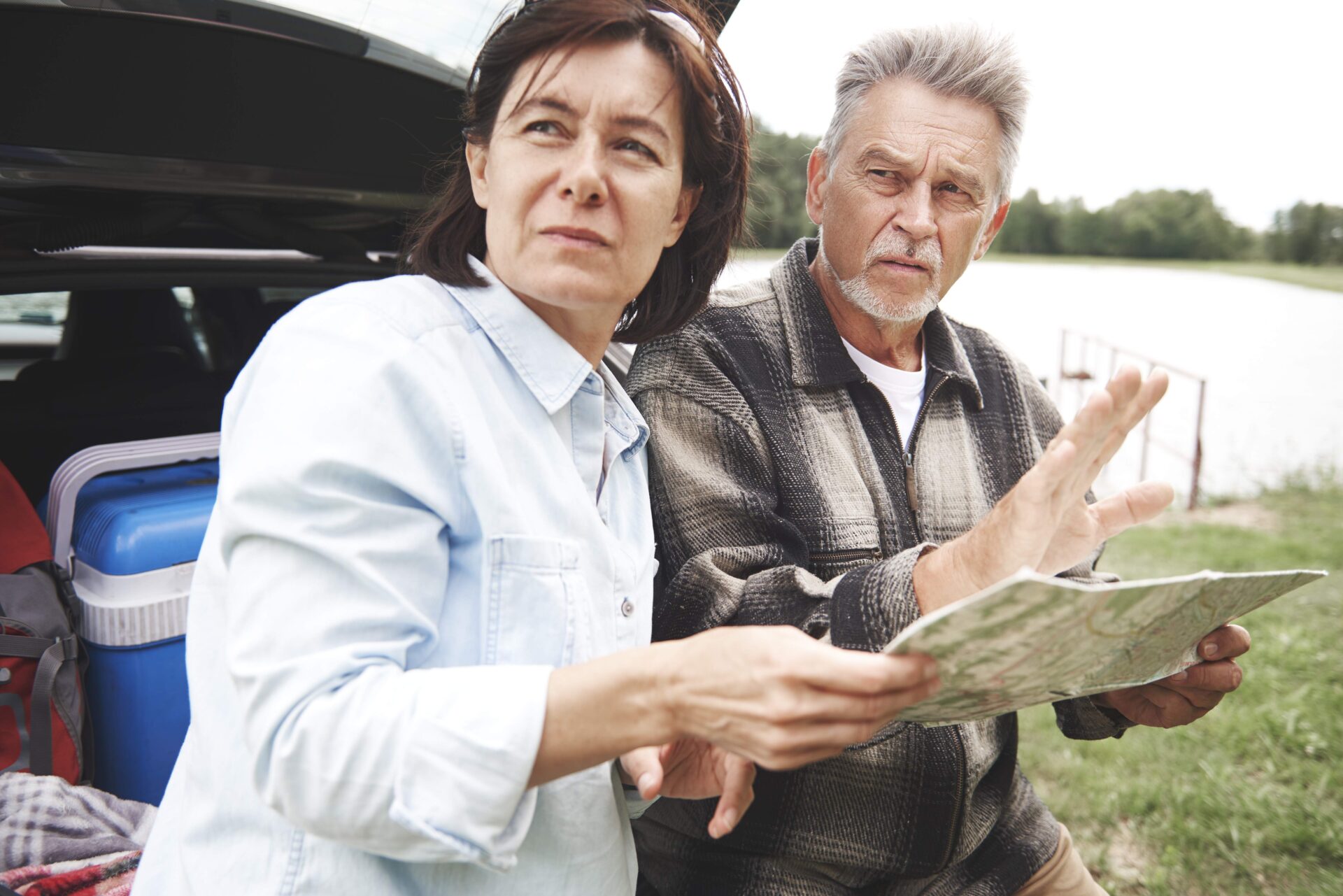
5. A British love for maps.
It’s not just drivers. The UK in general has a cultural fondness for cartography (the interest in all-things maps). [7]
Research carried out in 2025 by Ordnance Survey found that over half (52%) of Brits still believe maps – in all their forms – are ‘vital’. According to the research, the particular uses people felt they were important for were ‘Getting from A to B’ (55%), ‘Discovering new places we wouldn’t have otherwise known’ (48%) and ‘Helping us explore the outdoors safely’ (45%).
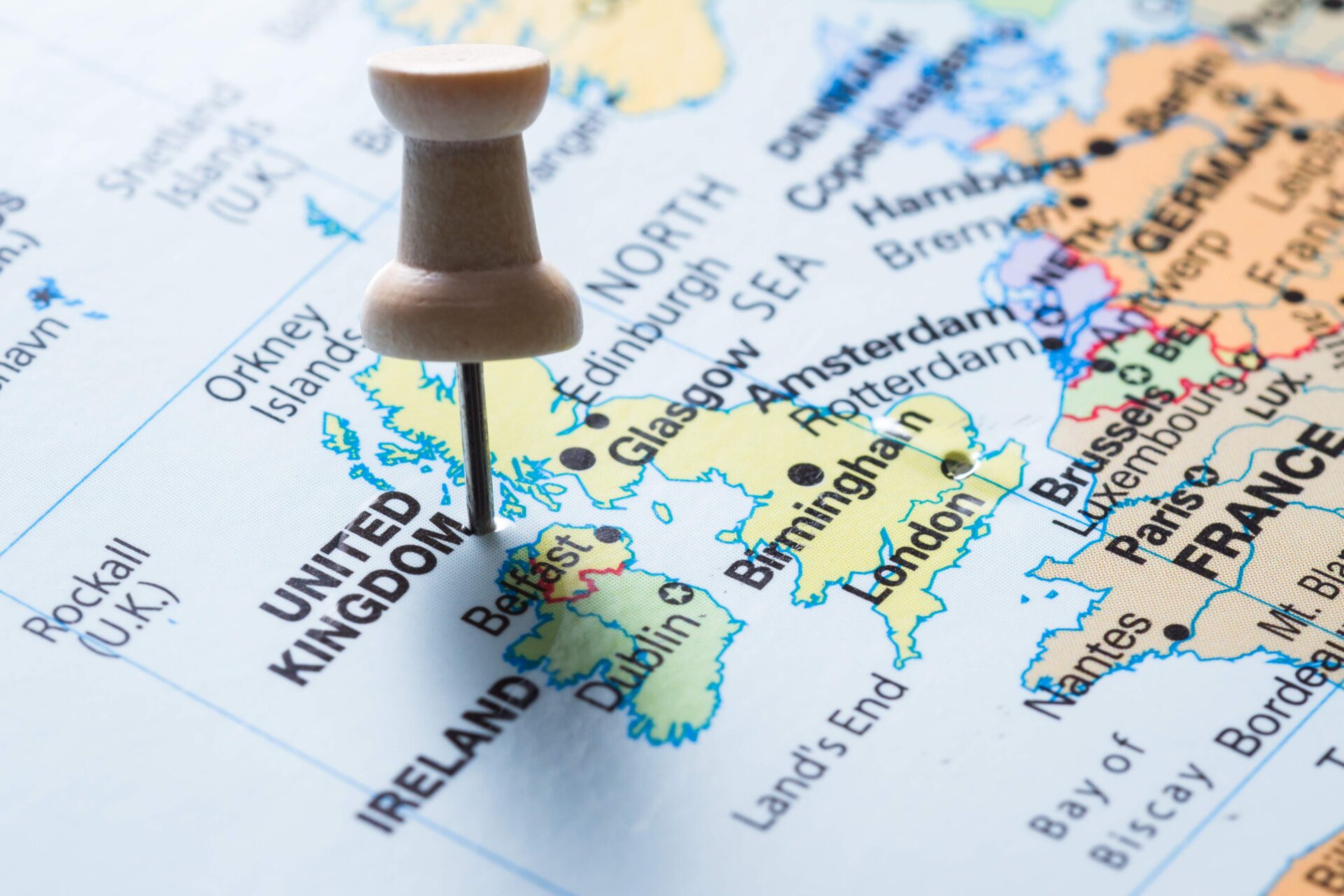
Ordnance Survey. A national treasure:
Founded in 1791, Ordnance Survey maps are part of British identity, used by ramblers, cyclists and other outdoor pursuits.
The OS paper map line still sells millions each year despite full digital alternatives. So, the idea that map-reading/use skills would vanish was always unlikely.
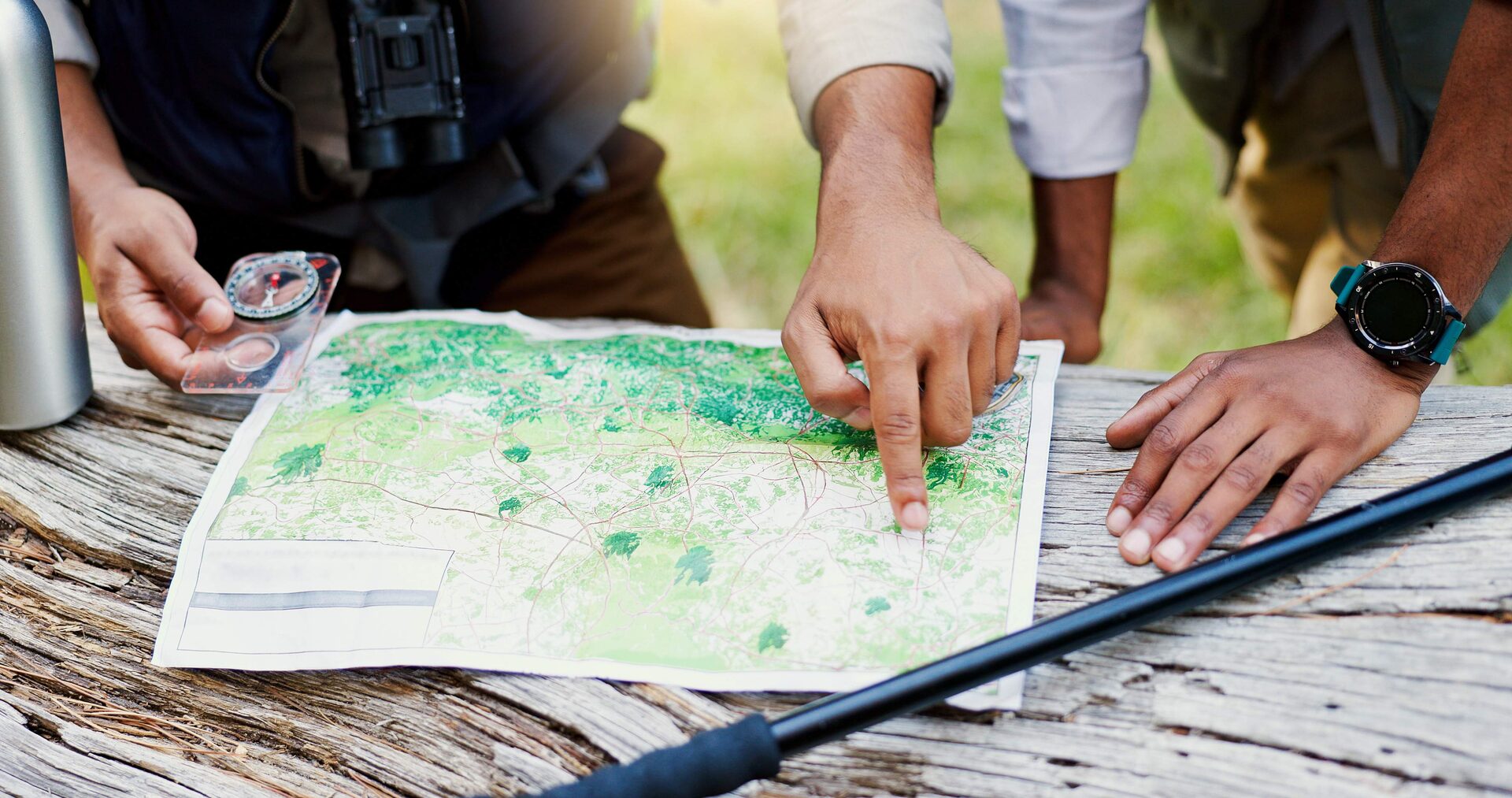
What does the law say about physical map navigation in vehicles?
The poll did not ask drivers to specify whether they were using their paper map for navigation before or during their route, but we thought it was worth noting what the law says on the matter:
Whilst there is no specific law against using or holding a paper map whilst driving [5], you can be prosecuted if you are deemed to ‘not be in proper control of your vehicle at all times’. This means that if the police deem your use of a paper map whilst in motion ‘distracting’, you could find yourself on the wrong side of the law.
Warrantywise firmly advises a safety-first approach. We strongly suggest – if they plan to use one – drivers plan out their route on a physical map before they begin their journey.

When sat-navs go wrong. Classic UK navigation mistakes:
Some infamous UK examples include:
- Drivers getting stuck on Hardknott Pass in the Lake District – a steep, narrow road no sat-nav should ever really recommend.
- Lorries getting wedged in tiny village streets, causing “sat-nav rage” among residents.
- Tourists directed into rivers or ferry-only routes, prompting councils to add ‘Do NOT follow your sat-nav’ signs. [6]
In fact, the Local Government Association (LGA) has repeatedly urged sat-nav companies to do more to prevent ‘inappropriate routing’.
These stories create folk wisdom passed from driver to driver: “Always check the route before you go.” And what’s the simplest way to check? A physical map.
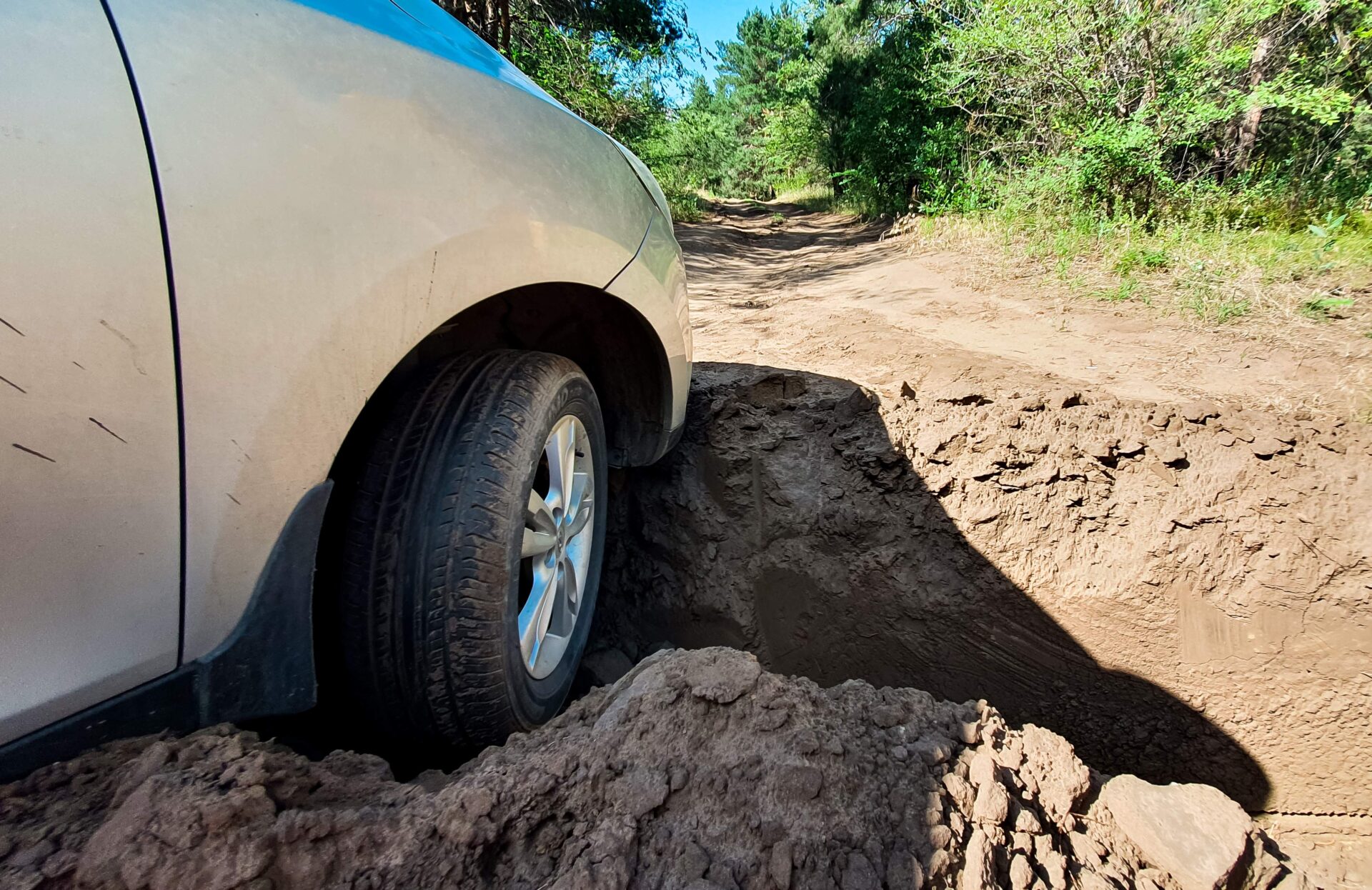
The social side. A map brings people together:
Paper maps can turn navigation into more of a shared experience.
On a road trip:
- Someone becomes the appointed ‘navigator’.
- People fold and unfold the map with differing levels of skill.
- There’s always a moment of debate about the best route.
- The driver ends up yelling “Can you turn it the right way up?” at least once.
Sat-nav is efficient, but it removes the communal joy of real-world wayfinding.
Families often keep old atlases stuffed with biro notes, highlighter routes, ferry times, short-cut scribbles – a living record of memories made on the road.

Regional trends. Where paper still reigns:
According to separate research, wider UK surveys suggest that physical map use is more common among:
- Drivers in rural regions (Yorkshire, Wales, Scotland)
- Drivers aged 55+
- Motorhome and caravan owners
- Classic car enthusiasts
- Long-distance or scenic-route travellers
Interestingly, usage spikes every summer as people take holidays in parts of the country where mobile reception drops off the radar.

Are we headed towards a map-less future?
Not anytime soon.
Even as phone apps improve, the UK’s unique road network – historic towns, rural complexity, inconsistent signage and dense urban traffic – keeps map literacy useful.
But more importantly, drivers value autonomy. Many people like having a backup plan. And as long as a map is the ultimate symbol of self-reliance on the road, it will retain a loyal audience.
What this means for motoring brands, software companies and breakdown providers:
The fact that nearly a fifth of UK drivers still rely on physical maps should be more than just a fun trivia point. It’s actionable insight, meaning:
1. Varied forms of support matter.
From customer communications to breakdown services, not everyone wants digital-only assistance. Some customers may genuinely prefer:
- Printed route packs
- Postal documents
- Phone-based guidance
…and they should be supported equitably.

2. Emergency backup guides still have value.
Many drivers – including ones that consistently use sat nav – may appreciate having:
- The option of a printed route as contingency
- Advice for what to do when tech fails
- Offline-friendly instructions
Brands that embrace hybrid systems build more trust.
3. Road safety messaging should recognise map users.
For example:
- ‘Check your map before you set off’
- ‘Plan your route in advance if travelling somewhere remote’
- ‘Carry a physical map as a backup in areas with limited signal’
All of these resonate with a large audience.
The verdict. Paper maps are still driving Britain forward:
For all the talk of digitalisation, in this context the UK remains a place where tradition and technology happily co-exist. The smartphone may navigate the majority of us from A to B, but a well-worn paper map – creased, scribbled on, loved – remains the trusted companion of millions.
And that 16%? They’re not necessarily lagging behind. They’re preserving a skill that has served British drivers well for generations.
In a way, physical maps are the comforting, dependable co-pilot we never outgrew. No battery, no signal, no fuss. Just guidance: clear, calm and always ready.
Sometimes, progress isn’t about replacing the old with the new. It’s about keeping what works and embracing both.
Discover more.
Further Warrantywise articles you might find useful…

Car care and maintenance – How to keep your car running longer.
(Approx. reading time: 17 minutes) Regular car maintenance and small changes can keep your car reliable for years, and with … Continued
DIY car maintenance? It’s not for UK drivers.
(Approx: 7min read) When it comes to looking after our cars, you’d think Brits would love getting their heads under … Continued

Part exchange or private sale… which one is right for you?
(Approx: 5 min read) When it’s time to move on from their current vehicle, drivers face a crucial decision: Part … Continued