

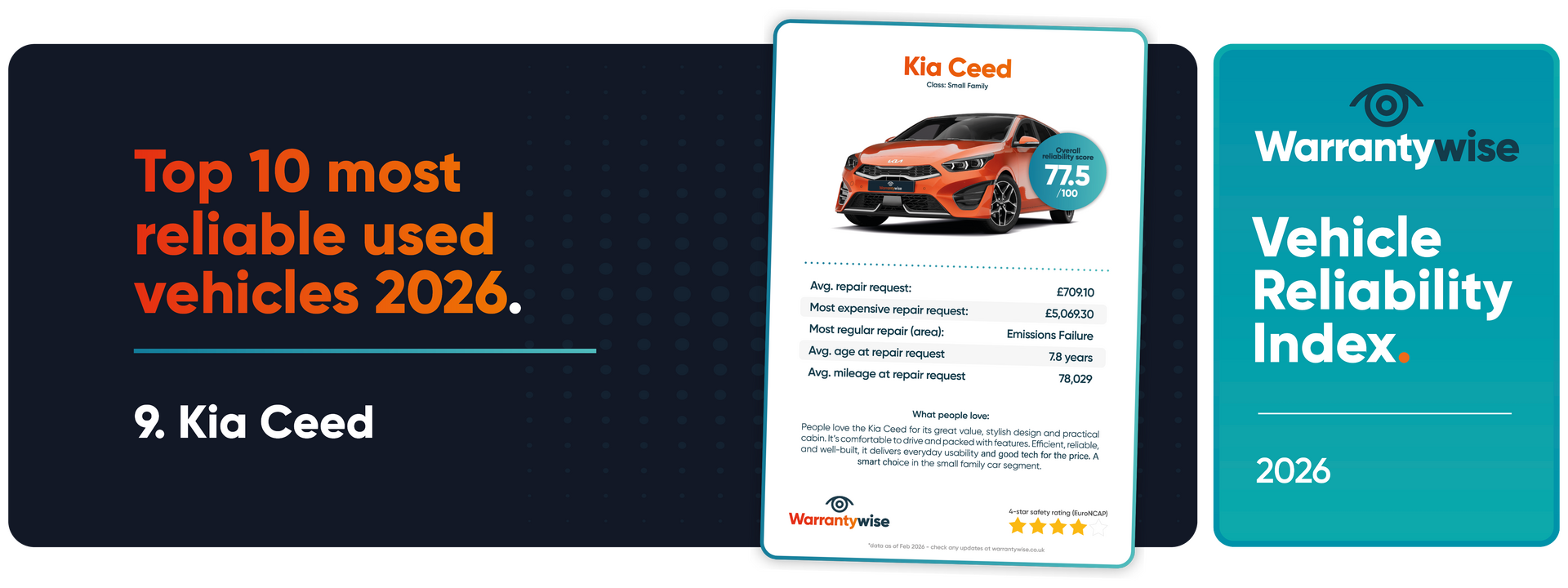
The Kia Ceed is a family hatchback designed to balance everyday practicality with sensible running costs [1]. Competing in the heart of one of the UK’s most popular car classes (Small Family) [2], it appeals to drivers who want a comfortable, well-equipped car without stepping into premium-brand pricing.
Available with a wide range of petrol, diesel and mild-hybrid engines (those that cannot run on electric power alone) across multiple generations, the Ceed takes 9th place on our Most Reliable list for 2026, compiled using data from our Reliability Index.
With an Overall Reliability Score score of 77.5 out of 100, the Kia Ceed performs solidly within the Small Family segment. While more complex than city cars, it avoids many of the advanced systems that can drive higher repair costs in some rivals [1].
For drivers seeking dependable, straightforward transport for commuting, family use and longer journeys, the Ceed remains a strong used-market contender.
Kia Ceed – Reliability Index data.
| Metric | Typical figure* | What this means |
|---|---|---|
| Average age at repair | 7.8 years | Issues tend to appear later in model’s lifespan |
| Average mileage at repair | 78,029 miles | Average mileage for repairs in relation to wider Reliability Index. |
| Average repair cost | £709.10 | Lower cost repairs compared to many models |
| Most regular repair area | Emissions | Increasingly common on some models |
| Highest recorded repair | £5,069.30 | Uncommon, but repairs can be costly for this model. |
| Reliability score | 77.5/100 | Indicates relatively predictable ownership |
*Figures are indicative and based on average used Kia Ceed repair data. Individual vehicles may vary.

What our data suggests about used Kia Ceed reliability:
Based on our historical repair data, the Kia Ceed takes 9th place on our Most Reliable list. It represents relatively predictable ownership, particularly when compared with larger or more complex vehicles. Most repair requests tend to occur after models are approaching eight years old, rather than early in the model’s lifespan.
With relatively low average repair costs (£709.10), for many owners, unexpected bills for the Ceed are more manageable than those associated with larger vehicles. That said, no car is immune to problems, and repair outcomes can vary depending on mileage, maintenance history and driving conditions.
Emissions failures are the most commonly-featured repair request for this model, reflecting both tightened emissions standards and the increased complexity of nitrous oxide sensors on modern vehicles – which, when faulty, can misreport emissions warning lights on the dashboard. [3]
The Ceed’s relatively conservative engineering [4] and widespread parts availability help keep long-term ownership costs under control. As always, servicing history, mileage and how the car has been driven remain key factors.
Why reliability can vary between Ceed models:
While the Kia Ceed is often associated with dependable ownership, reliability is never guaranteed. Factors that can influence repair likelihood include:
- Servicing and maintenance history: Having your car serviced and maintained at the manufacturer’s specified intervals can reduce repair likelihood.
- Mileage and driving style: Accelerate gently, avoid harsh braking and try to maintain steady speeds.
- Urban use versus longer motorway journeys: Frequent, short trips (where the car’s engine never reaches full operating temperature) can increase stress on starter motors, reduce battery life and cause increased wear on various engine components [5].
- Previous owners and care standards: Insist on a full-service history and try to investigate previous owners’ care for the car.
- Hybrid vs petrol powertrains: Hybrid Ceed models, for example, introduce additional electrical components [6] that may alter long-term repair patterns, while higher-mileage examples may naturally face wear-related repairs sooner.
Our reliability data is best used as a guideline, not a guarantee. Two identical Ceed models can perform very differently depending on how they’ve been looked after.
What people love about the Kia Ceed:
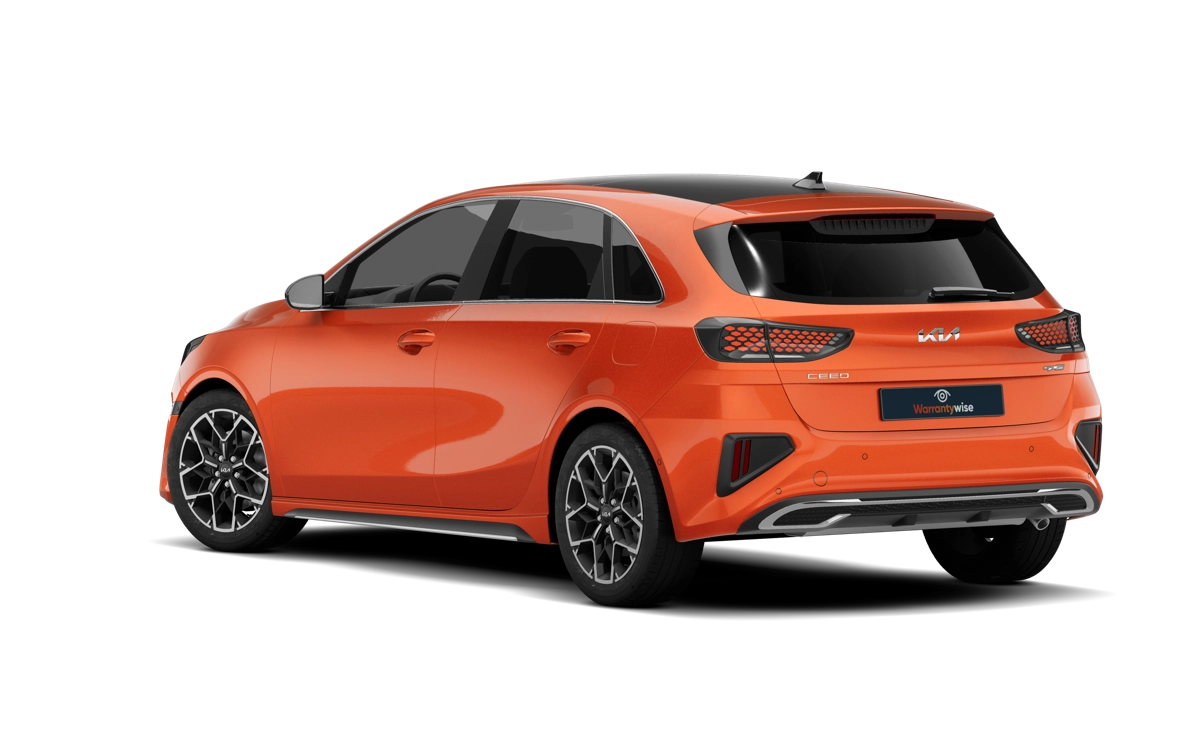
People love the Kia Ceed for its great value, stylish design and practical cabin. It’s comfortable to drive and packed with features. Efficient, reliable, and well-built, it delivers everyday usability and good tech for the price. A smart choice in the Small Family car segment.
Owners often choose the Ceed for its balance of comfort, value and ease of ownership rather than for standout performance or luxury.
Commonly highlighted strengths include:
- Comfortable ride and well-judged handling
- Good interior space for passengers and luggage
- Strong value for money compared with rivals
- Kia’s long manufacturer warranty when new, which supports buyer confidence
For many drivers, the Ceed delivers reassurance through familiarity and usability.
Kia Ceed safety:
The Kia Ceed received a four-star Euro NCAP safety rating (2019) with standard equipment [7]. This rating has since expired but still provides useful context for structural safety performance at the time of assessment.
ISOFIX child seat mounting points are fitted as standard, and the Ceed’s practical cabin layout makes it well suited to family use, school runs and longer journeys.
How much does a used Kia Ceed cost?
Used prices vary depending on age, mileage, engine choice and trim level, but typical UK market ranges include:
| Vehicle age | Typical mileage | Price range |
|---|---|---|
| 3–5 years old | Under 50k miles | £14,000 – £19,000 |
| 5–7 years old | Under 70k miles | £10,000 – £15,000 |
| 7-9 years old | Under 90k miles | £7,000 – £11,000 |
Prices will vary depending on age, mileage, spec and general condition. Price ranges from Autotrader, March 2026. Prices subject to change.
When budgeting, buyers should factor in servicing, tyres and brake replacement alongside the possibility of unexpected repairs.
In 2025, the RAC reported that two-thirds (65%) of drivers have had to fork out for unexpected car repair costs in the last year [6] – up from 59% last year.
Even with an average Ceed repair cost at a relatively modest £709, it’s still important to be confident your budget can accommodate potential repair work over time.
Is the Kia Ceed a sensible used buy?
The Kia Ceed may be a good fit if:
- You want a practical and comfortable family hatchback
- You value predictable ownership costs
- You prefer proven engineering over cutting-edge complexity
- You choose a car with a clear service history
Things you may wish to consider:
- It’s less distinctive than some rivals
- Performance-focused drivers may find it conservative
As with all vehicles, long-term ownership experience depends on condition, maintenance and usage rather than brand alone.
Warranty considerations:
The Kia Ceed scores well on average in relation to our wider Reliability Index. Known for its practicality and strong reputation for reliability, the Ceed is a popular choice for drivers looking for dependable everyday motoring. However, if repairs are needed, our data shows the average repair request can reach £709.
Warrantywise plans start from just £30 per month for the Ceed, helping you to budget for unexpected repair costs. (Prices may vary depending on your specific warranty plan).
If explored, it’s sensible to:
- Understand what is and isn’t included in the warranty plan
- Treat it as a budgeting tool rather than a guarantee
- Balance the cost against the car’s age, mileage and value
A warranty should support informed ownership decisions, not replace regular servicing or careful pre-purchase checks.
Speak to one of our friendly warranty experts to find out if a warranty is right for you. Or start your warranty quote for your Kia Ceed today by clicking the link or calling our team on 01254 355 100.
Explore other models on our Top 10 most reliable list:
Here are the other vehicles with highest reliability scores and what this means for used car owners.
| Make / Model | Reliability Score (Out of 100) |
|---|---|
| 1. TOYOTA YARIS | 89.2 |
| 2. KIA PICANTO | 86.8 |
| 3. TOYOTA AYGO | 83.8 |
| 4. TOYOTA RAV-4 | 79.9 |
| 5. PEUGEOT 108 | 78.9 |
| 6. TOYOTA HILUX | 78.4 |
| 7. CITROEN C1 | 78 |
| 8. SUZUKI VITARA | 78 |
| 9. KIA CEED | 77.5 |
| 10. SUZUKI SWIFT | 77.5 |
Data note: This overview uses historical repair request data as one part of a broader ownership picture. It does not guarantee whether any individual vehicle will or will not experience repair issues. Vehicle reliability is influenced by many factors, including maintenance, usage and condition at the time of purchase. These aspects should always be considered alongside professional inspections and service records.
Sources:
Reliability Index scores are based on historical repair request data, including 1. Repair request frequency, 2. Labour hours, 3. Average vehicle age at repair and 4. Average vehicle mileage at repair between Jan 2023 and Jan 2026. The data includes vehicles aged three to fifteen years old, with a minimum of 250 vehicles on plan per model.
Average repair request values reflect the data period analysed. Ongoing increases in labour and parts costs may affect future repair costs. All data is sourced from Warrantywise’s internal Reliability Index and is believed to be accurate at the time of publication. Warrantywise may update this information as new Index data becomes available. All car class/segment titles referred to taken from euroncap.com.
External sources of information:
[1] Kia Ceed
Disclaimer: The information provided in this guide is for general informational purposes only and does not constitute legal or financial advice.